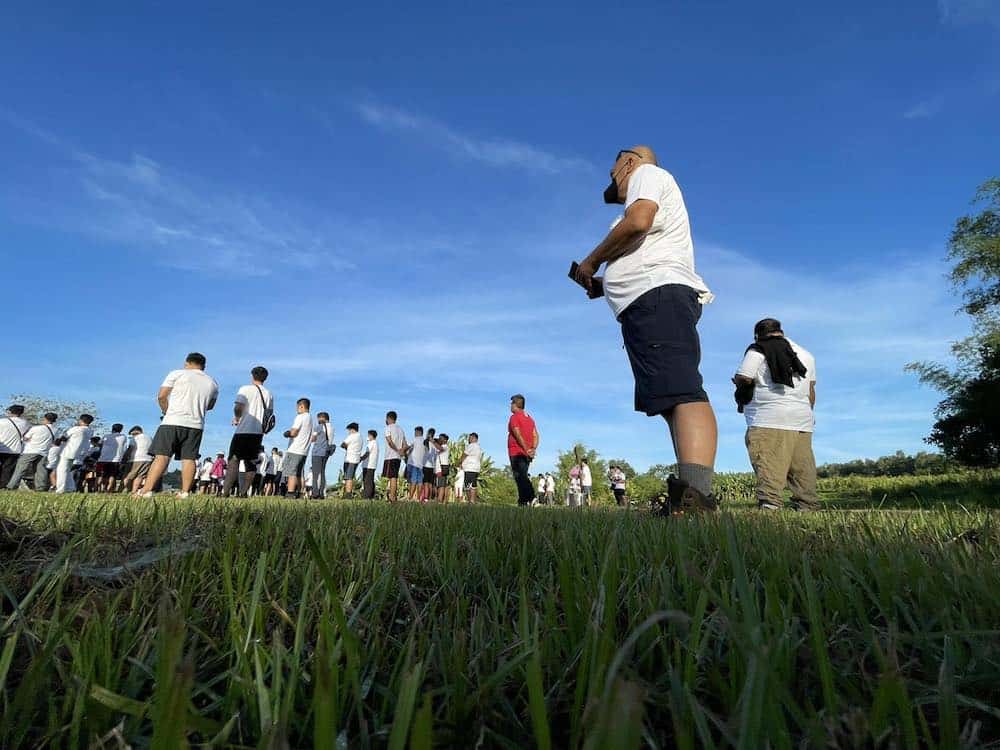
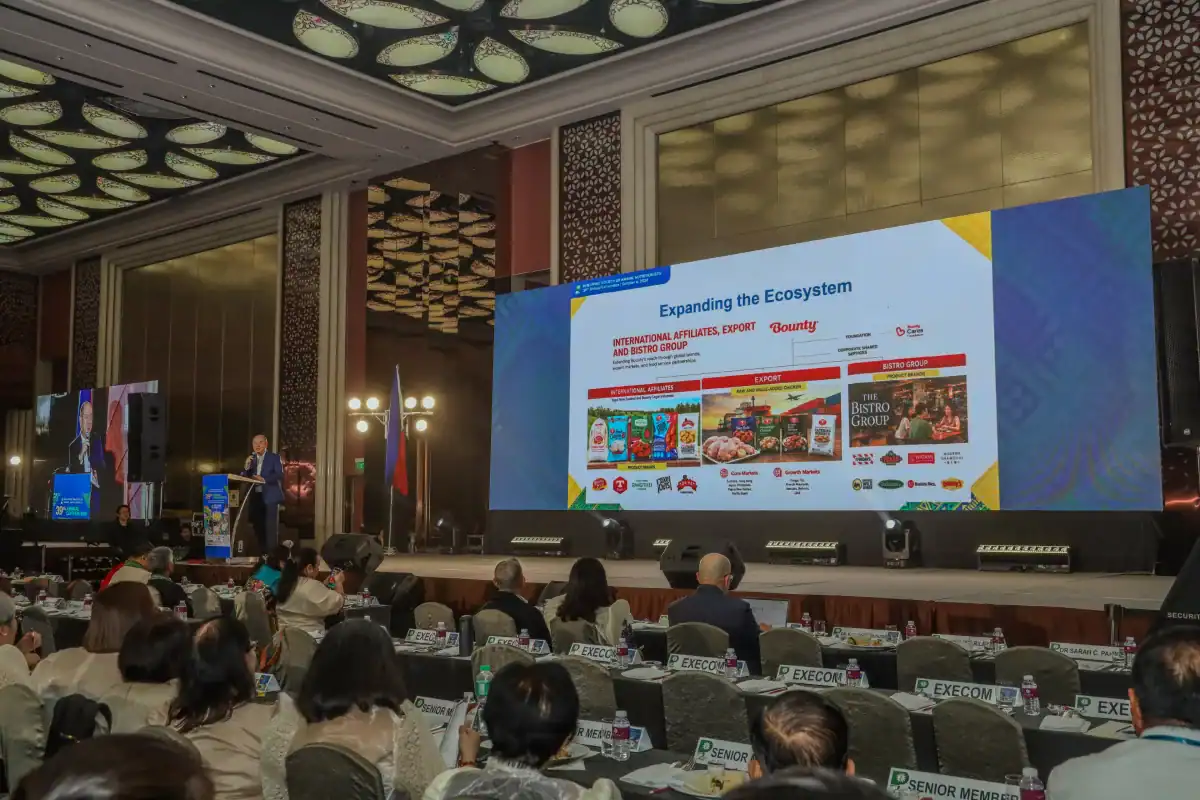
At the 39th Annual Convention of the Philippine Society of Animal Nutritionists (PHILSAN), held on October 6, 2026, at the Grand Ballroom of Okada Manila, Atty. Kenneth G. Cheng, CEO of Bounty Fresh Group Holdings Inc. and President of the Fresh Group, delivered a keynote address titled “Feeding the Future: Building a Stronger Philippine Livestock and Poultry Industry.”
His message was simple. As Filipino demand for chicken keeps growing, the industry’s goal has to grow with it:
“The challenge is not simply to produce more. We have to produce better.”
Three eras, one direction
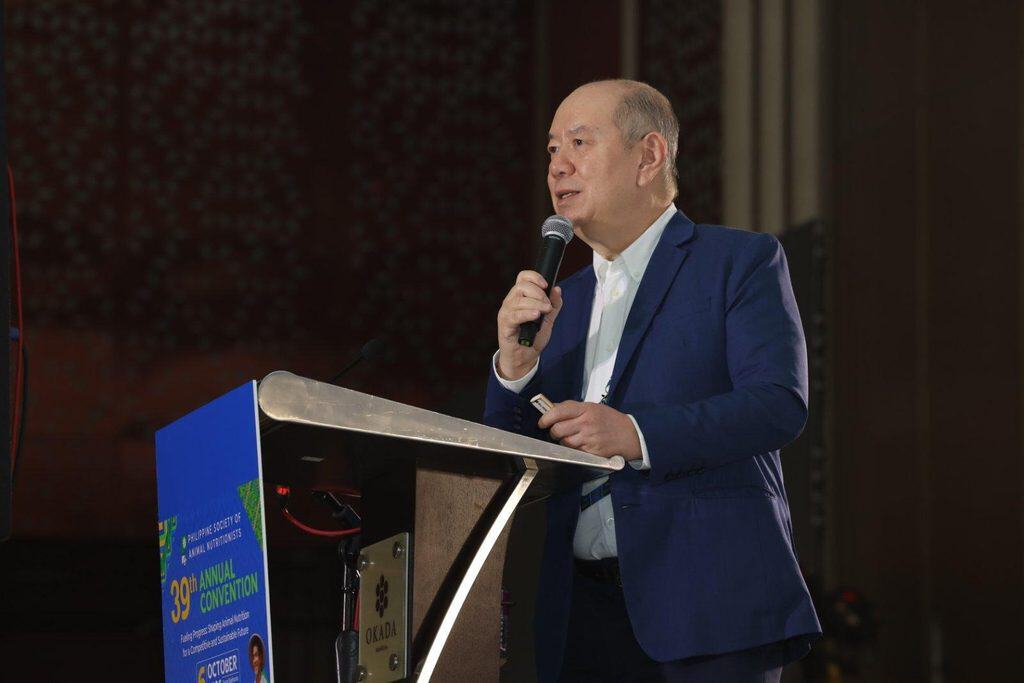
Atty. Cheng described the Philippine poultry industry as moving through three eras: Production (can we produce enough?), Integration (can we produce better?), and Value (how do we create greater value?). We are now in the third, where the focus is on meaningful value for consumers, partners, farmers, and society.
This mirrors Bounty’s own 40-year journey (1986–2026). Starting in 1986 as a small farm in Sta. Maria, Bulacan—operating with 30-year-old secondhand incubators, one delivery chick van, and a feed mixer rescued from a junkyard—Bounty systematically scaled its operations.
From there, Bounty grew into feed manufacturing, hatcheries, broiler processing, and nationwide retail with Chooks-to-Go in 2008. Today it is an integrated food ecosystem spanning the Fresh Group, Agri Group (Inoza Feeds, Inoza Vet, Inoza Equipment), Branded & Value-Added Group, Restaurant Group, international affiliates in New Zealand and Indonesia, and food service partnerships such as The Bistro Group.
Nutrition as a capability
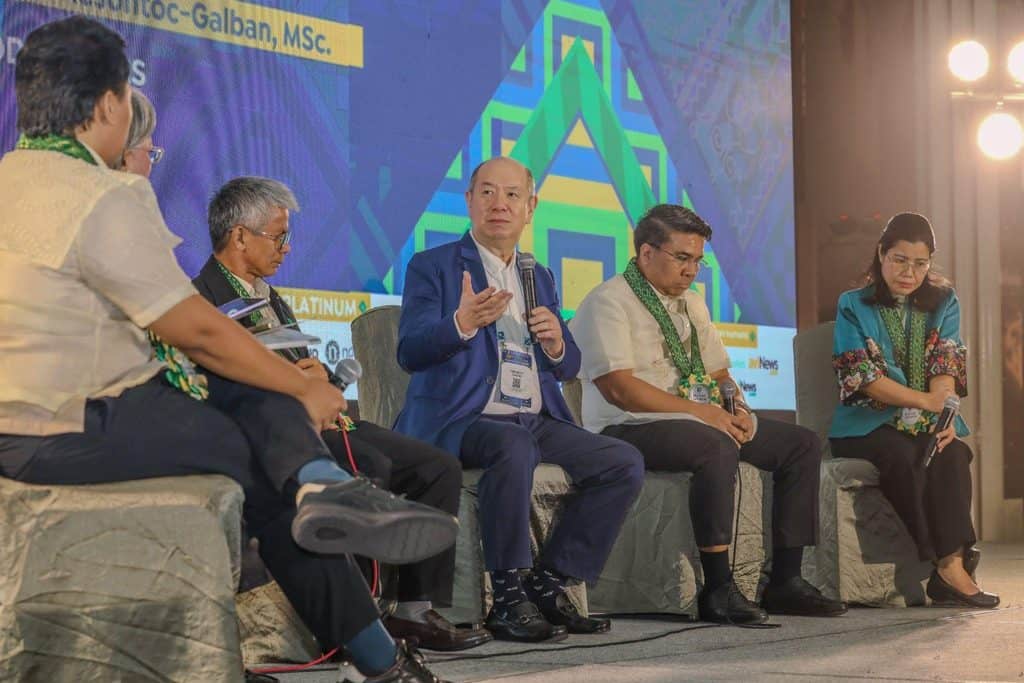
Speaking directly to the nutritionists in the room, he described nutrition as the center of the modern food system, driving animal health, performance, efficiency, cost-effectiveness, and environmental protection.
That, he said, means the animal nutritionist’s role must evolve from feed formulator to value creator. By connecting Science (better nutrition), Economics (better efficiency), Technology (smarter decisions), and Sustainability (better resource use), nutritionists hold a direct lever in building a food-secure Philippines.
Every Profession Has a Role to Play
In his concluding remarks, Atty. Cheng reasserted that achieving national food security is a multi-disciplinary effort. It requires active synergy across farmers, nutritionists, veterinarians, scientists, engineers, and business leaders. Every improvement made at the feed mill, diagnostic lab, farm, or processing facility ultimately reaches the dinner tables of millions of Filipino families. By aligning scientific capability with operational excellence, the Philippine livestock and poultry industry can create a stronger, healthier, and even more sustainable nation.
At Bounty, that is the work we keep doing: better science, better nutrition, and better food for every Filipino family.
Frequently Asked Questions (FAQ):
1. What was the 39th PHILSAN Annual Convention?
It was a gathering of animal nutritionists, agricultural experts, government officials, and industry leaders at the Grand Ballroom of Okada Manila on October 6, 2026. This year’s theme was “Fueling Progress: Shaping Animal Nutrition for a Competitive and Sustainable Future.”
2. What was the core message of Atty. Kenneth Cheng’s presentation at the 39th PHILSAN Annual Convention?
The presentation, titled “Feeding the Future: Building a Stronger Philippine Livestock and Poultry Industry,” emphasized that addressing food security is not just about scaling volume—it requires shifting from pure production to value creation. True food security starts long before food reaches the table, requiring an integrated value chain, stronger biosecurity, and cross-disciplinary collaboration across the agricultural sector.
3. What does “produce better, not just more” mean?
Per capita chicken consumption in the country stands at 19 kg, making it an increasingly vital protein source. In 2025, the total Philippine chicken market reached 2.18 million metric tons (MT) (1.63M MT local production + 554,000 MT imports). Market demand is projected to grow by an additional 200,000 MT over the next five years.
Atty. Cheng stressed that meeting this demand is not only about scale. It is also about quality, efficiency, reliability, and value for everyone in the chain.
4. Who is responsible for building a food-secure Philippines?
All of us. Farmers, nutritionists, veterinarians, scientists, engineers, and business leaders each contribute to what reaches the Filipino table.