When families buy chicken, they want food that is fresh, safe, and consistently good. Behind every product is a carefully managed chicken process designed to protect quality from the very beginning. At Bounty, every stage is monitored closely, from breeding and farming to processing and delivery, so consumers can feel confident about the chicken they serve at home.
Bounty operates a fully integrated chicken process that gives the company control over food safety, freshness, traceability, and consistency. This system allows Bounty to oversee the full journey of every chicken before it reaches supermarkets, restaurants, and Chooks-to-Go stores nationwide.
In this blog, we uncover the chicken process behind Bounty products and the steps that help guarantee safety, quality, and fresh taste on your plate.
Where the Chicken Process Begins
The chicken process starts at Bounty’s breeder farms, where high-quality hatching eggs are produced using carefully managed breeding systems. Bird health, sanitation, and production standards are monitored closely to maintain consistency from the start.
The hatching eggs are then transferred to Bounty hatcheries, where they are incubated under controlled temperature, humidity, and airflow conditions. Once hatched, the day-old chicks are checked before being transferred to broiler farms.
Managing these early stages internally helps Bounty maintain better quality control and traceability throughout the chicken process.
Raising Chickens with Strict Farm Standards
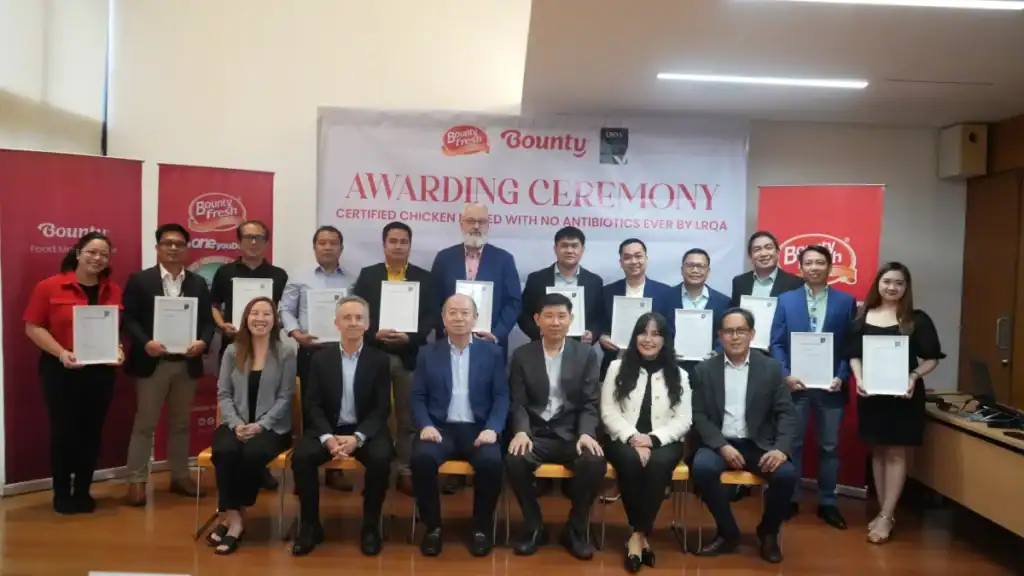
Bounty Fresh Group Holdings Inc. (a major Philippine poultry producer) received the first “Reared Without Antibiotics” (RWA) and “Non-Antibiotic Ever” (NAE) certifications in the country from Lloyd’s Register Quality Assurance (LRQA). This certification ensures that Bounty farms and feed mills meet stringent global auditing standards by completely eliminating the use of antibiotics across the entire lifecycle of the chickens.
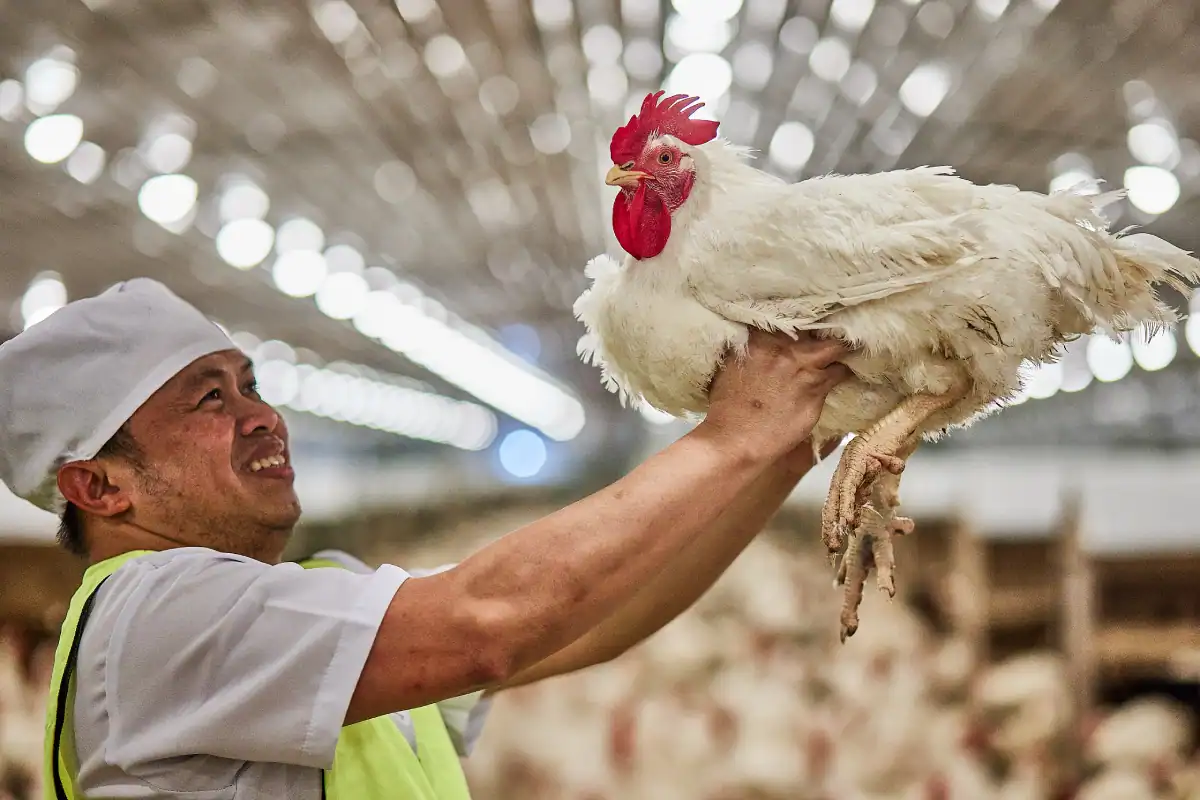
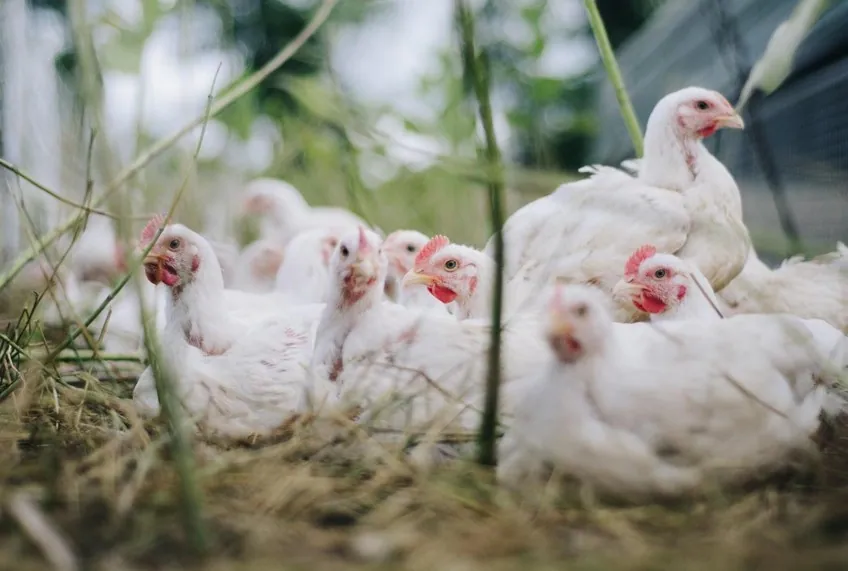
At the broiler farms, the chicks are raised under controlled nutrition, welfare, and biosecurity programs. Feed quality, water supply, housing conditions, ventilation, and vaccination schedules are carefully monitored to support healthy bird growth.
A major part of Bounty’s chicken process is its No Antibiotics Ever or NAE program, which has been independently certified by Lloyd’s Register Quality Assurance or LRQA. Under this program, chickens are raised without antibiotics throughout their life cycle.
Instead of relying on routine antibiotics, Bounty focuses on preventive health programs, proper nutrition, vaccination, sanitation, a stress free environment so the bird will not develop any infection and strong biosecurity systems. This approach supports both food safety and responsible farming practices.
Food Safety Built Into the Chicken Process
Food safety is part of the entire chicken process, not just the final inspection. Across feedmills, farms, hatcheries, processing plants, and distribution channels, Bounty follows strict systems designed to protect product quality.
At the feedmill level, raw materials are validated and checked before use. HACCP or Hazard Analysis Critical Control Point protocols help identify and manage food safety risks during feed production. Cross-contamination controls are also enforced.
On farms and in hatcheries, strict biosecurity measures help reduce disease risks. Farm access is controlled, sanitation protocols are implemented, and traceability systems track birds throughout the chicken process.
Inside processing plants, operations follow HACCP and Good Manufacturing Practice or GMP standards. Hygiene, processing temperatures, and product quality are continuously monitored to maintain food safety from production to packaging. According to the Food and Agriculture Organization, integrated biosecurity systems are among the most effective ways to improve poultry food safety and disease prevention.
Preserving Freshness During Processing
Once birds reach harvest readiness, they are transported to Bounty’s processing facilities. The chicken process includes synchronized harvest planning to reduce waiting times and preserve product quality.
Animal welfare standards are also followed during catching, transport, and processing. Proper ventilation, humane handling, and controlled transport conditions help reduce stress on the birds, which supports better meat quality and freshness.
Inside the processing plant, rapid chilling systems help maintain food safety and product freshness immediately after processing. Product temperatures are closely monitored while quality checks continue throughout production.
This stage of the chicken process helps preserve the texture, appearance, and shelf life consumers expect from fresh chicken products.
Maintaining the Cold Chain
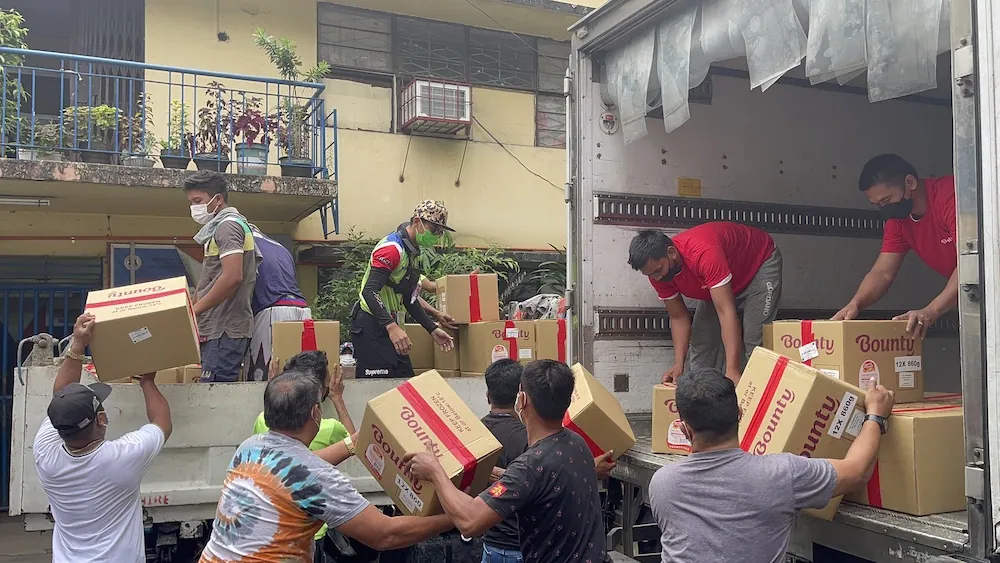
Freshness depends heavily on proper temperature control. To maintain quality, Bounty uses refrigerated logistics throughout the chicken process, from processing facilities to retail stores.
Products move through a cold-chain system designed to maintain safe temperatures during transport and distribution. This includes deliveries to Chooks-to-Go stores and retail partners nationwide.
Proper cold-chain handling helps minimize spoilage risks and supports food safety by slowing bacterial growth. According to the International Institute of Refrigeration, cold-chain systems are among the most important factors in preserving food freshness and quality.
Because Bounty manages its own distribution network, products move from farm to market faster while maintaining consistent quality standards.
Sustainability Across the Chicken Process
Bounty also integrates sustainability into its chicken process through responsible farming and operational improvements.
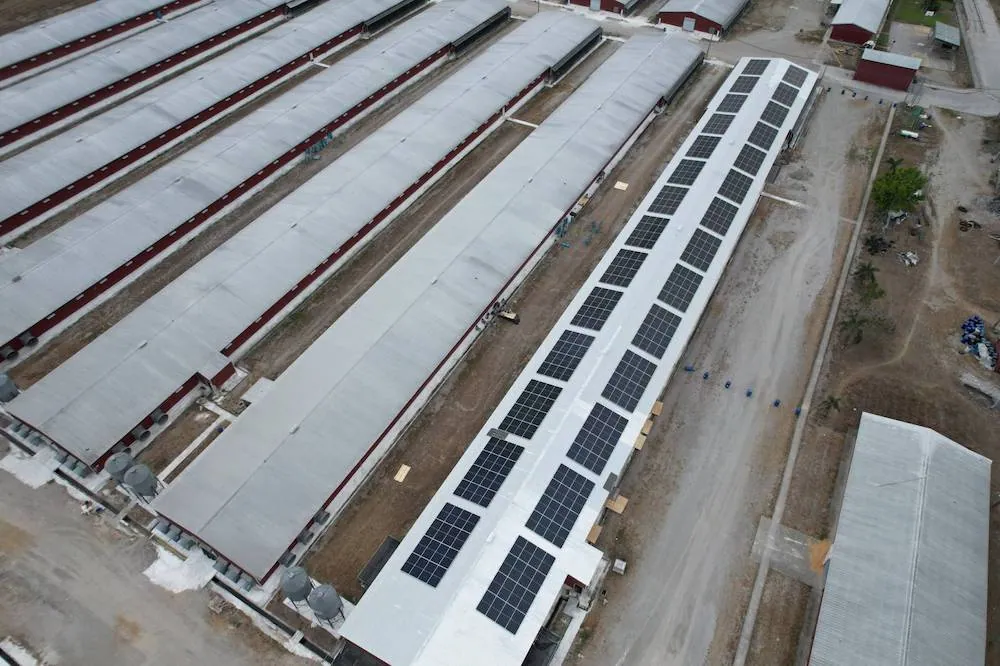
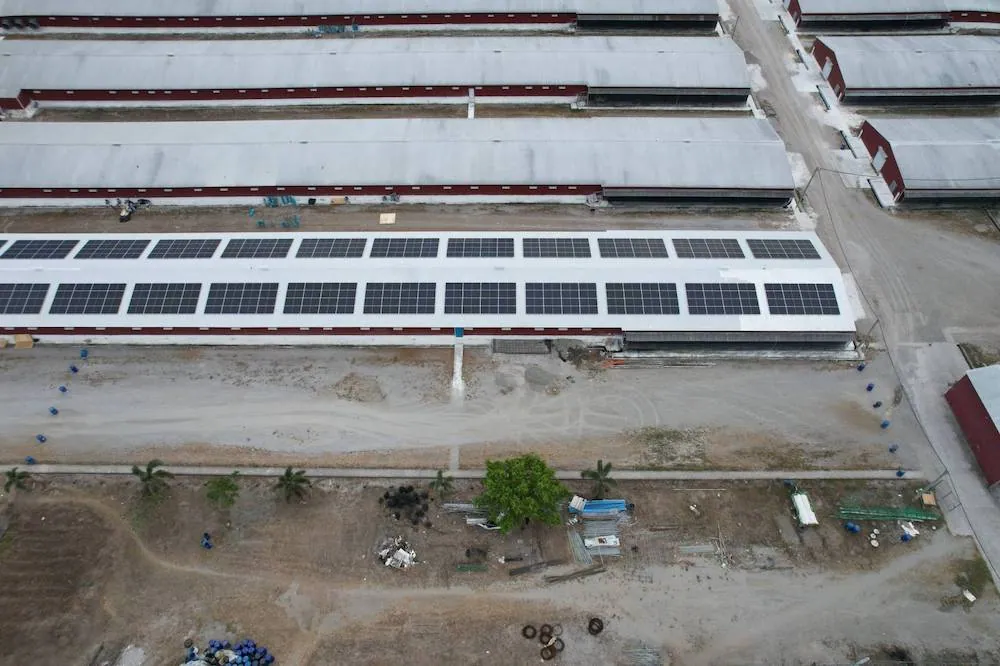
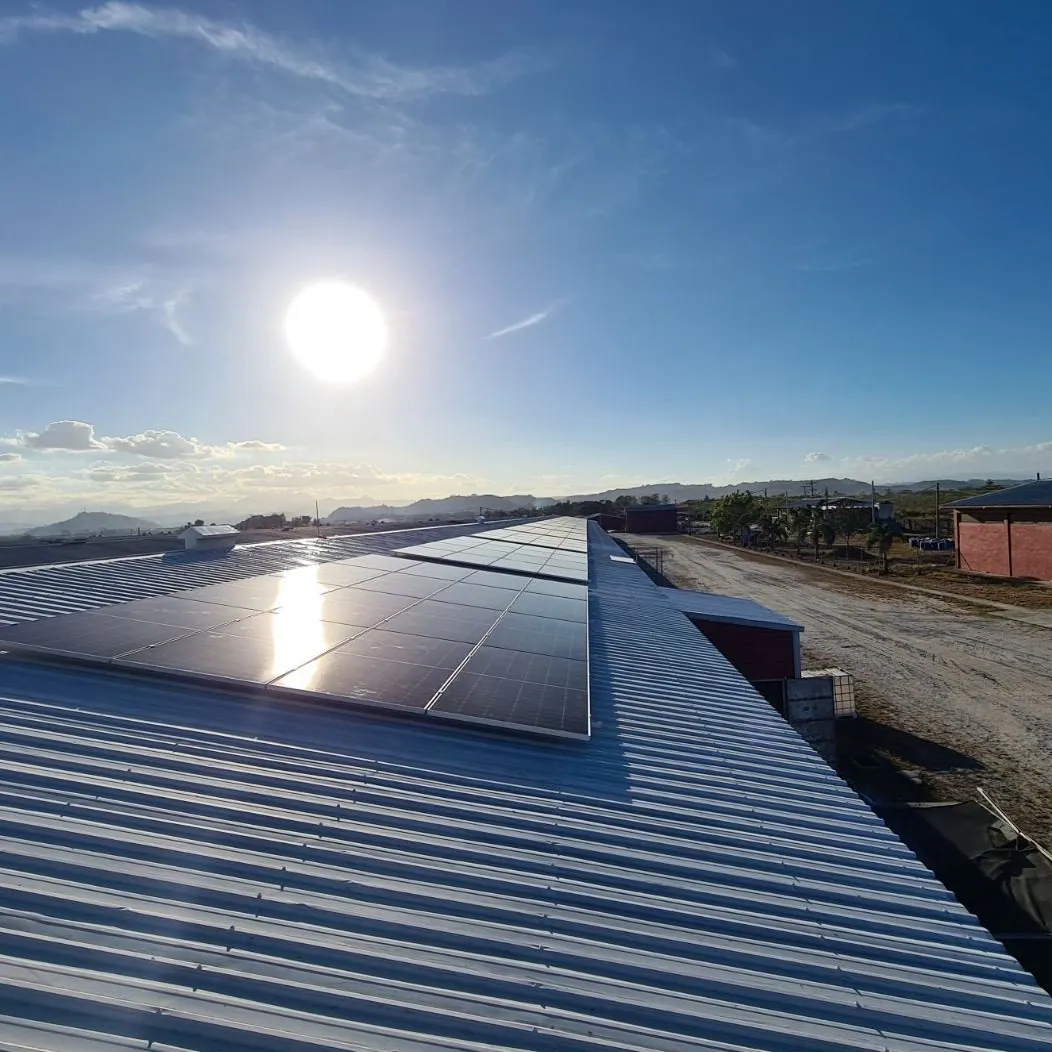
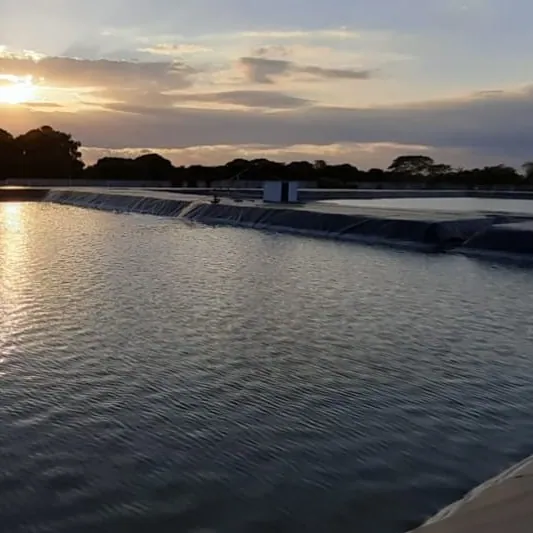
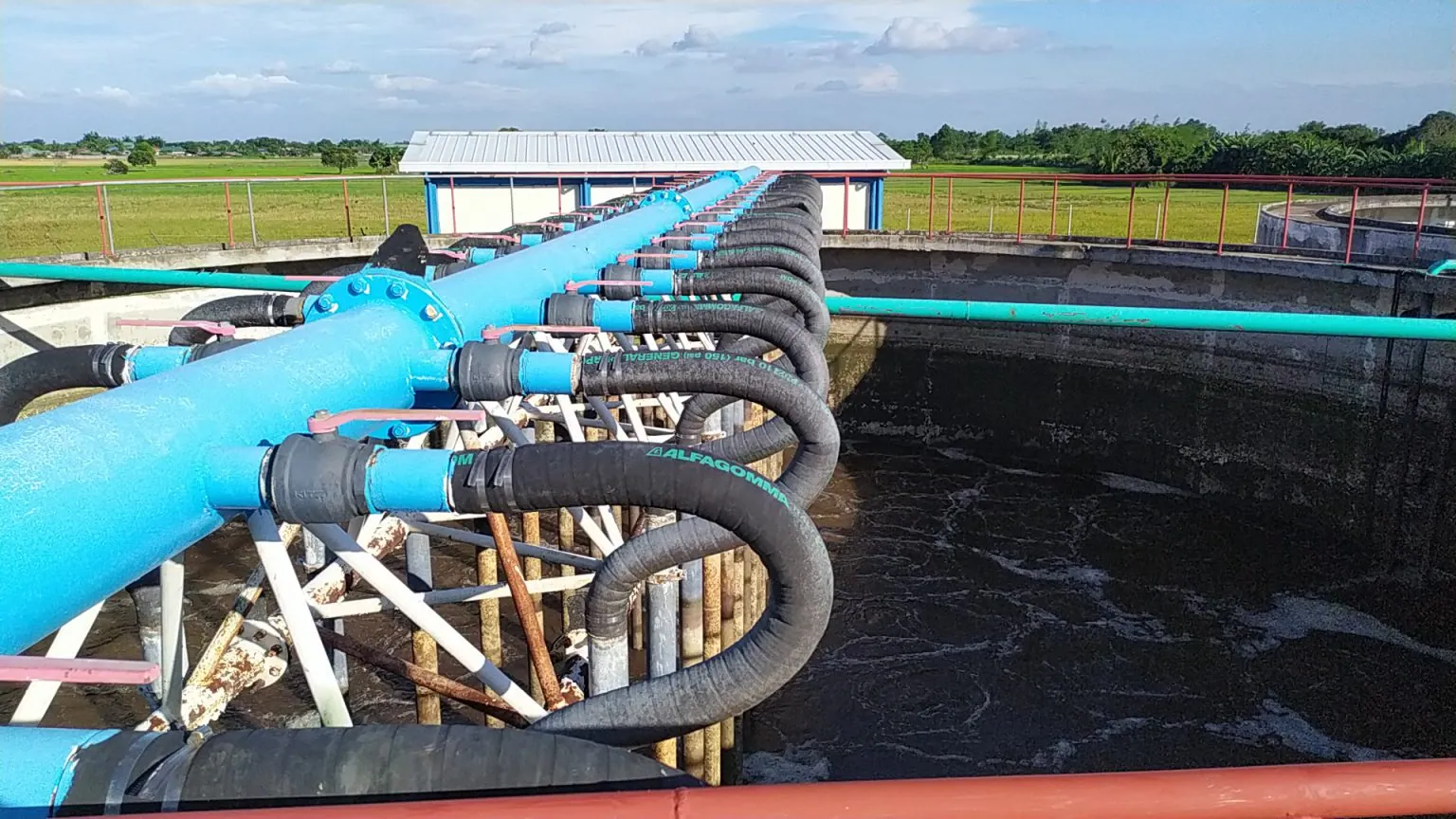
The company invests in waste management systems, water conservation initiatives, renewable energy projects, and efficient feed programs to help reduce environmental impact. Animal welfare standards are also maintained across farm and processing operations through proper housing, nutrition, and humane handling practices.
The integrated system also supports contract growers, local communities, and long-term employment opportunities across the poultry sector.
As consumers become more conscious about how food is produced, responsible farming and supply chain transparency continue to play a bigger role in building trust.
What Makes Bounty’s Chicken Process Different
One of the biggest advantages of Bounty’s chicken process is full integration. The company manages major stages of production, including breeder farms, hatcheries, feedmills, broiler farms, processing plants, logistics, and retail distribution.
This allows Bounty to maintain tighter control over product quality, traceability, freshness, and food safety standards throughout the chicken process.
Bounty also continues to invest in mechanized facilities and modern production technology to improve consistency and operational efficiency. Its LRQA-certified NAE program provides consumers with added assurance that products meet strict production standards.
With more than 1,800 Chooks-to-Go stores nationwide, Bounty’s integrated retail network also supports faster farm-to-consumer delivery across the Philippines.
Bringing Fresh, Safe Chicken to Filipino Families
Every stage of Bounty’s chicken process is designed with consumers in mind. From breeding and farming to processing and retail distribution, the company applies strict standards that prioritize safety, quality, freshness, and responsible farming.
As more Filipinos look for transparency in how food is produced, understanding the chicken process behind every product becomes increasingly important. Through its integrated operations, food safety systems, cold-chain logistics, and sustainability efforts, Bounty continues to deliver chicken products that families can trust.
Frequently Asked Questions
What is Bounty’s chicken process?
Bounty’s chicken process is a fully integrated farm-to-table system that covers breeder farms, hatcheries, broiler farms, processing plants, cold-chain logistics, and retail distribution. This system helps maintain food safety, freshness, traceability, and consistent product quality.
How does Bounty ensure food safety during the chicken process?
Food safety is built into every stage of the chicken process through HACCP protocols, ISO-certified systems, Good Manufacturing Practice standards, biosecurity programs, quality monitoring, and cold-chain handling from farm to retail.
What does No Antibiotics Ever mean in Bounty’s chicken process?
Bounty’s No Antibiotics Ever (NAE) program means chickens are raised without antibiotics throughout their life cycle. The program is independently certified by Lloyd’s Register Quality Assurance, providing consumers with added confidence in product quality and responsible farming practices.
How does Bounty maintain freshness from farm to store?
Bounty maintains freshness through synchronized harvest planning, rapid processing, rapid chilling systems, refrigerated transport, and strict cold-chain logistics that preserve product quality until it reaches retail stores like Chooks-to-Go.
What makes Bounty’s chicken process different from other poultry companies?
Bounty’s chicken process stands out because the company manages the entire production chain, from feedmills and hatcheries to processing plants and retail distribution. This integrated approach allows stronger quality control, better traceability, faster delivery, and more consistent product standards.